If 16:8 feels intimidating, start here. 12:12 asks only that you fast for twelve hours and eat within twelve — which, for most people, means finishing dinner by 8pm and not eating again until 8am. It aligns neatly with your body natural day-night rhythm, and many people are nearly doing it already.
| Fasting window | 12 hours |
|---|---|
| Eating window | 12 hours (e.g. 8am–8pm) |
| Frequency | Daily |
| Difficulty | Absolute beginner |
| Best for | First-timers, anyone easing in, those who dislike skipping breakfast |
| Great for | Building the habit before tightening the window |
What 12:12 is
12:12 is the gentlest form of time-restricted eating. You are mostly just closing the kitchen after dinner and not snacking late into the night. There is no skipped meal, no white-knuckle hunger — just a clean overnight fast that lets insulin settle and digestion rest before sleep.
Why start here
The best fasting protocol is the one you actually keep, and 12:12 is almost frictionless. It builds the core habit — a defined eating window and a clean overnight fast — without the adaptation discomfort of longer fasts. Master it for a couple of weeks and stepping to 14:10 or 16:8 becomes easy.
Finish dinner, note the time, and do not eat again for twelve hours. That is the entire protocol. Most of the work is just not snacking after dinner.
A sample day
- 8:00am — Break the overnight fast with breakfast.
- 12:30pm — Lunch.
- 7:30pm — Dinner, finishing by 8pm.
- 8:00pm — Kitchen closes; 12-hour fast begins.
What to eat
Because 12:12 does not restrict much on its own, what you eat matters more here than the fast itself. Build balanced meals around protein, vegetables, and whole foods, and use the "kitchen closed" rule to cut the late-night grazing that quietly adds up.
Three meals across a 12:12 day
Balanced, ordinary, and easy to sustain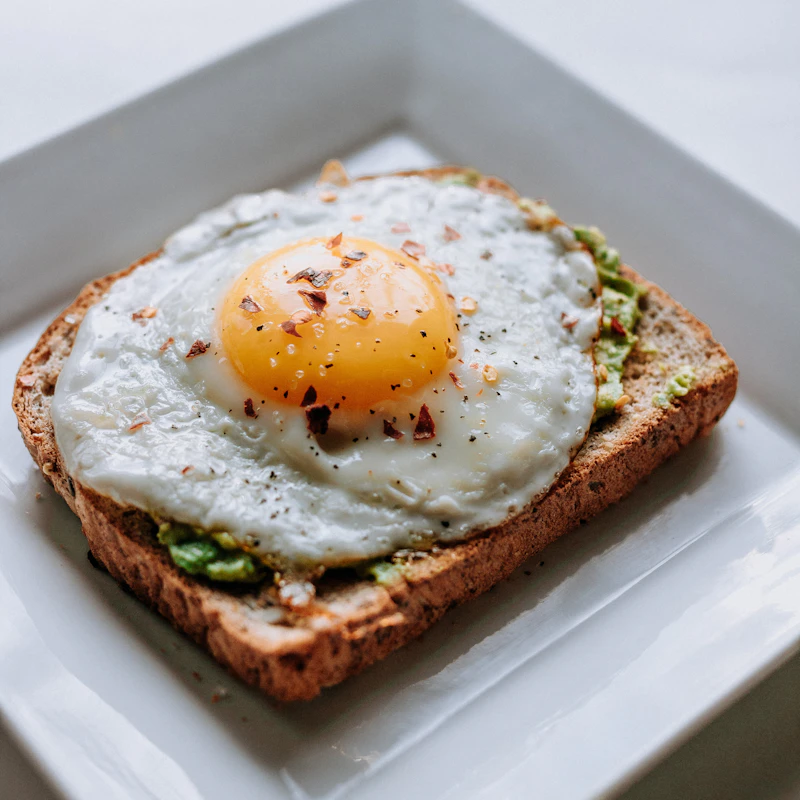
Eggs & greens
Open the day with protein to steady your appetite.

Salmon & grains
A balanced midday plate keeps energy even.

Veg & protein plate
Finish by 8pm and let the overnight fast begin.
Who it suits
Best for
- Complete beginners to fasting
- Anyone who wants breakfast kept
- People easing back after a break
- Those who mainly need to stop late-night snacking
Watch-outs
- People ready for faster results (try 16:8)
- Anyone hoping for deep daily fat-burning
Where to go next
Once 12:12 feels automatic — usually within a week or two — nudge your eating window in by 30 minutes every few days. Push breakfast later or dinner earlier until you reach 14:10, then 16:8. You will barely notice the transition, because you will have already built the only habit that really matters: a defined window and a clean fast.
Frequently asked questions
Is 12:12 actually fasting?
Will I lose weight on 12:12?
Is 12:12 good for beginners?
How do I move from 12:12 to 16:8?
References & further reading
- Gill S, Panda S. "A Smartphone App Reveals Erratic Eating Patterns in Humans that Can Be Modulated for Health Benefits." Cell Metabolism, 2015.
- Manoogian ENC, et al. "Time-restricted Eating for the Prevention and Management of Metabolic Diseases." Endocrine Reviews, 2022.
- de Cabo R, Mattson MP. "Effects of Intermittent Fasting on Health, Aging, and Disease." NEJM, 2019.
This guide is for general educational purposes and is not medical advice. Intermittent fasting is not appropriate for everyone — including people who are pregnant or breastfeeding, those with a history of disordered eating, or anyone managing diabetes or other medical conditions. Speak with a qualified clinician before making significant changes to how you eat.